What Is an Autumn Simile?
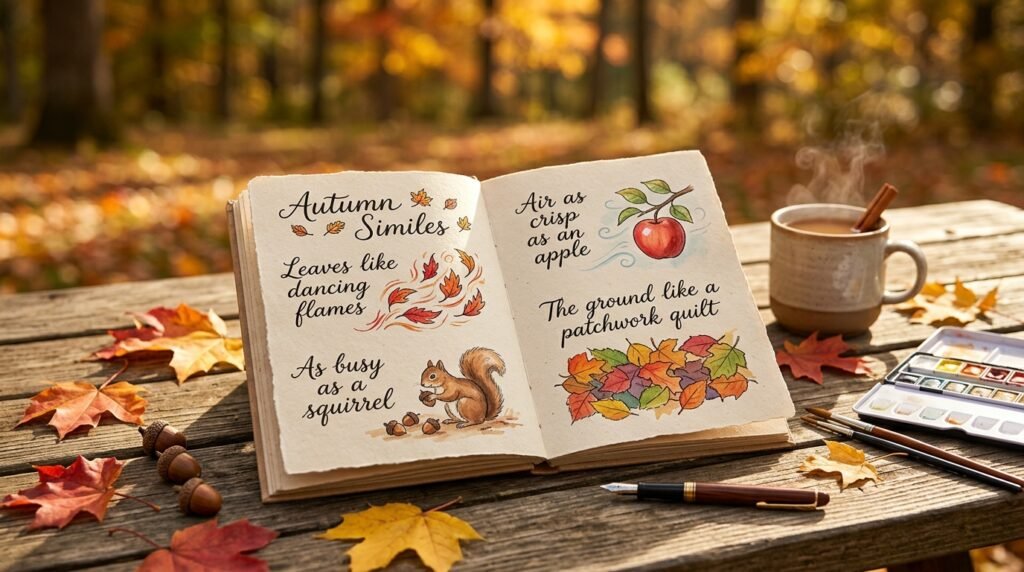
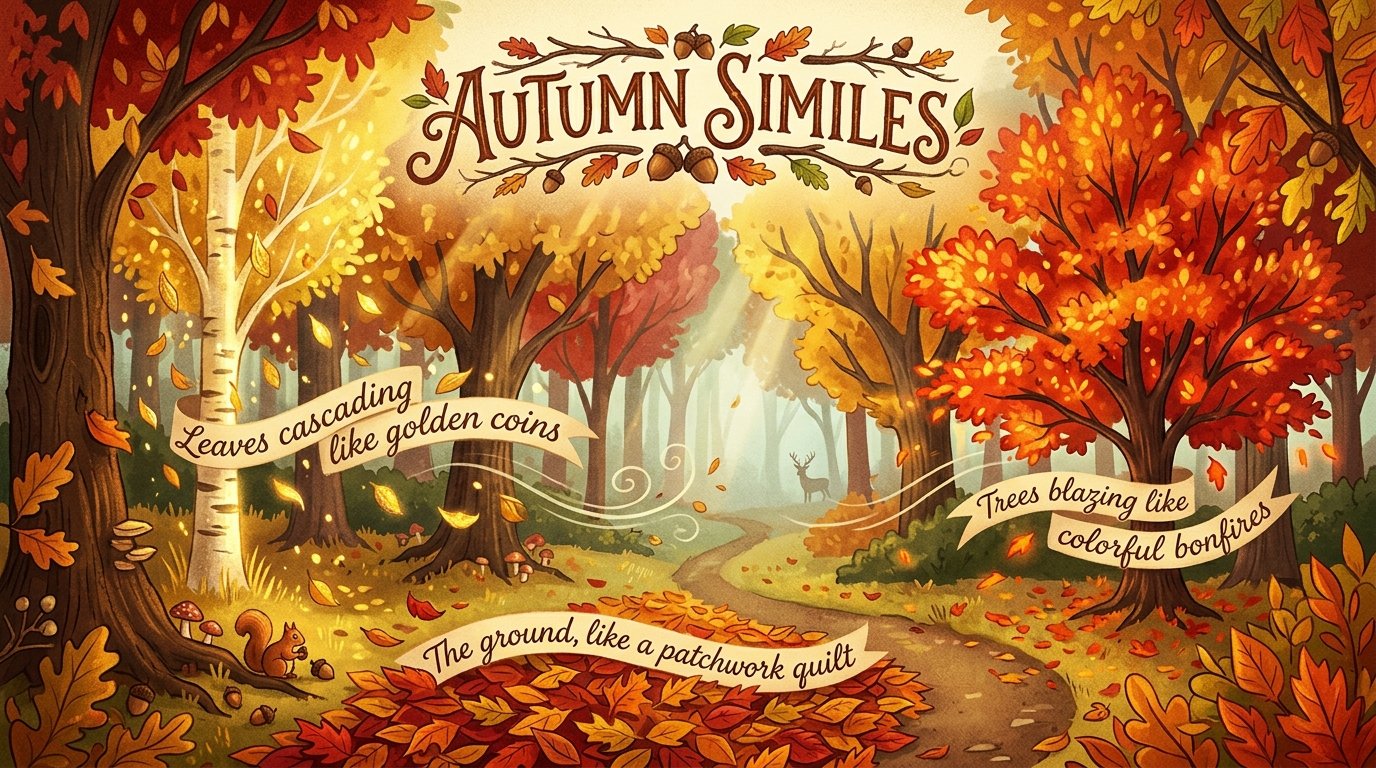
An autumn simile is a figure of speech that compares something associated with fall to another thing using the words like or as. These comparisons help describe autumn’s changing leaves, crisp air, harvest season, cozy evenings, and peaceful landscapes.
For example:
The leaves danced like tiny flames. This compares colorful falling leaves to flickering fire.
The morning air was as crisp as a fresh apple. This emphasizes the cool, refreshing feeling of an autumn morning.
The forest glowed like a golden cathedral. This creates an image of sunlight illuminating trees with yellow and orange leaves.
Similes are useful because they turn simple descriptions into pictures readers can imagine. Instead of saying, “The leaves were colorful,” you might write, “The leaves shimmered like stained glass in the afternoon sun.”
75 Best Autumn Similes With Meanings
Here are 75 autumn similes organized by imagery, weather, colors, sounds, emotions, and creative writing needs. The examples are original formulations designed to give you a variety of styles and uses.
Autumn Similes About Leaves
Leaves are among the most recognizable symbols of fall. Use these similes to describe their colors, movement, shapes, and textures.
# | Autumn simile | Meaning and explanation |
|---|---|---|
1 | Leaves fell like golden confetti. | Leaves scattered through the air like festive paper. |
2 | The leaves danced like tiny ballerinas. | Leaves moved gracefully in the breeze. |
3 | Red leaves glowed like hot embers. | Their colors looked bright and fiery. |
4 | The ground was covered like a patchwork quilt. | Different leaf colors formed a beautiful pattern. |
5 | Leaves fluttered like butterflies in flight. | Their movements were light and unpredictable. |
6 | The branches stood as bare as empty cages. | The trees had lost most of their leaves. |
7 | The leaves crunched like brittle crackers. | Dry leaves made a crisp sound underfoot. |
8 | A single leaf drifted like a paper boat. | One leaf floated slowly through the air. |
9 | The maple tree shone like a copper lantern. | Its red-orange foliage appeared luminous. |
10 | The leaves spun like coins tossed into the wind. | Leaves whirled and flashed as they fell. |
11 | Yellow leaves shimmered like pieces of silk. | Their surfaces appeared soft and delicate. |
12 | The forest blazed like a row of torches. | Bright autumn foliage filled the woodland. |
13 | The leaves gathered like scattered puzzle pieces. | Leaves collected in uneven patches on the ground. |
14 | A leaf trembled like a tiny flag. | A leaf quivered on its stem in the breeze. |
15 | The oak leaves hung like golden hands. | Their shapes and positions suggested outstretched fingers. |
Autumn Similes About Weather and Cold Air
Cool mornings, drifting fog, and gusty winds help establish the atmosphere of an autumn scene.
# | Autumn simile | Meaning and explanation |
|---|---|---|
16 | The morning air was as crisp as a fresh apple. | The air felt cool, clean, and refreshing. |
17 | The wind rushed like a train through the trees. | Strong gusts moved noisily through the branches. |
18 | The fog crept like a quiet visitor. | Mist slowly covered the landscape. |
19 | The breeze felt as gentle as a feather’s touch. | A soft wind brushed against the skin. |
20 | The frost sparkled like crushed diamonds. | Ice crystals glittered in the morning light. |
21 | The rain tapped like impatient fingers on the window. | Raindrops made repeated, delicate sounds. |
22 | The clouds hung like gray wool blankets. | Thick clouds made the sky look heavy and dull. |
23 | The autumn chill bit like a curious puppy. | The cold felt sharp but not overwhelming. |
24 | The wind whistled like a lonely flute. | Air passing through trees or gaps made a musical sound. |
25 | The puddles shone like mirrors after the rain. | Water reflected the pale autumn sky. |
26 | The sunlight felt as mild as warm milk. | The sunshine provided gentle rather than intense warmth. |
27 | The storm rolled in like an army of shadows. | Dark clouds approached with dramatic force. |
28 | The mist wrapped around the hills like a silk scarf. | Fog covered the hills in a soft layer. |
29 | The cold morning stung like tiny needles. | Chilly air created a prickling sensation. |
30 | The last raindrops fell like beads from a broken necklace. | Water droplets fell separately from leaves or rooftops. |
Autumn Similes About Colors and Scenery
Autumn’s palette ranges from bright gold to deep burgundy. These comparisons help writers bring landscapes to life.
# | Autumn simile | Meaning and explanation |
|---|---|---|
31 | The hillside looked like a painter’s dream. | The landscape displayed an extraordinary mix of colors. |
32 | The trees were as golden as honey in sunlight. | Their leaves reflected a rich yellow glow. |
33 | The sunset burned like a ribbon of molten copper. | The horizon glowed with reddish-orange light. |
34 | The pumpkin patch shone like a field of little suns. | Bright pumpkins stood out against the earth. |
35 | The vineyard stretched like a green-and-gold carpet. | Rows of vines formed a patterned landscape. |
36 | The harvest moon floated like a silver balloon. | The moon appeared round and luminous. |
37 | The woodland was as colorful as a stained-glass window. | Different leaf colors created a vibrant scene. |
38 | The golden fields rippled like waves on a quiet sea. | Wind moved through the crops in rolling patterns. |
39 | The berries gleamed like tiny rubies. | Their red color and shine caught the eye. |
40 | The branches reached like crooked fingers toward the sky. | Bare branches appeared twisted and elongated. |
41 | The garden faded like an old watercolor painting. | Its bright summer colors became softer and duller. |
42 | The autumn sky looked like a peach brushed with gold. | Soft pink, orange, and golden hues colored the sky. |
43 | The orchard stood like a golden palace. | Sunlit trees created a rich, majestic scene. |
44 | The river reflected the trees like a polished mirror. | Still water reproduced the autumn colors. |
45 | The distant mountains looked as soft as faded velvet. | Haze made their outlines seem smooth and muted. |
Autumn Similes About Sounds and Smells
Fall is more than a visual season. Crunching leaves, wood smoke, ripe apples, and warm spices can make a description feel tangible.
# | Autumn simile | Meaning and explanation |
|---|---|---|
46 | The leaves crackled like a small campfire beneath my shoes. | Dry leaves made a crisp, crackling noise. |
47 | The wind murmured like an old storyteller. | The breeze created a low, continuous rustling sound. |
48 | The branches knocked like wooden drums. | Wind made branches tap against one another. |
49 | The geese called like distant trumpets. | Their loud cries carried across the sky. |
50 | The owl’s hoot echoed like a bell in an empty hall. | Its call sounded clear in the quiet woods. |
51 | The scent of cinnamon spread like a warm welcome. | A spicy aroma made the room feel inviting. |
52 | The wood smoke curled like a gray ribbon. | Smoke rose in twisting, flowing shapes. |
53 | The apples smelled as sweet as a summer orchard. | Their fragrance suggested ripe fruit and freshness. |
54 | The rain whispered like a secret against the roof. | Gentle rainfall created a soft, soothing sound. |
55 | The bonfire roared like a hungry lion. | Flames crackled loudly and energetically. |
Autumn Similes About Cozy Feelings and Emotions
Autumn often inspires feelings of comfort, nostalgia, peacefulness, and change. These comparisons are useful for reflective essays, personal narratives, and poetry.
# | Autumn simile | Meaning and explanation |
|---|---|---|
56 | The blanket felt as cozy as a hug from an old friend. | The blanket offered comfort and reassurance. |
57 | The evening settled like a sleepy cat beside the fire. | The night arrived quietly and peacefully. |
58 | Her memories returned like leaves on a wandering breeze. | Old memories resurfaced unexpectedly. |
59 | The quiet park felt as peaceful as a sleeping village. | The park was still and undisturbed. |
60 | His sadness lingered like fog over a field. | His feelings were persistent and difficult to shake. |
61 | The warm tea tasted like a little pocket of sunshine. | The drink brought comfort on a cold day. |
62 | The final autumn afternoon slipped away like sand through fingers. | Time passed quickly and could not be held. |
63 | Her laughter rang like wind chimes in a gentle breeze. | Her laughter sounded light and cheerful. |
64 | The empty garden looked as lonely as a forgotten playground. | The garden appeared deserted and neglected. |
65 | The first chilly evening arrived like an old familiar song. | The change in weather brought a sense of recognition and nostalgia. |
Creative Autumn Similes for Poems and Stories
These more imaginative comparisons can help establish a distinctive voice in descriptive writing and fiction.
# | Autumn simile | Meaning and explanation |
|---|---|---|
66 | The forest glimmered like a kingdom under a golden spell. | The glowing trees made the woods seem magical. |
67 | The crooked path wound like a question through the trees. | The path seemed mysterious and uncertain. |
68 | The last leaf clung to the branch like a letter refusing to be sent. | The leaf suggested hesitation or reluctance to leave. |
69 | The shadows stretched like ink spilled across the garden. | Darkness spread over the ground as daylight faded. |
70 | The bare trees stood like dancers frozen between steps. | Their twisted branches suggested movement stopped in time. |
71 | The twilight shimmered like a secret behind a curtain. | The fading light created a mysterious atmosphere. |
72 | The country road curved like a sleeping snake beneath the leaves. | The road’s winding shape suggested a resting snake. |
73 | The dying sunlight faded like a song played in another room. | The light diminished gradually and seemed distant. |
74 | The orchard glowed like a treasure chest left open. | Bright fruit and foliage made the orchard seem full of riches. |
75 | Autumn arrived like a quiet guest carrying a suitcase of gold. | The season brought colorful changes without a loud announcement. |
How to Use Autumn Similes in a Sentence
Choosing a good simile is about matching the comparison to the feeling or picture you want to create. A simile about golden leaves may suit a cheerful description, while one about fog and shadows may create suspense.
Here are three ways to use autumn similes effectively.
1. In a descriptive paragraph
Instead of writing, “The park was beautiful in autumn,” try:
The park glowed with color. Golden leaves fell like confetti, and the cool breeze slipped through the branches. Beyond the pond, the mist wrapped around the trees like a silk scarf.
2. In a poem
Use a simile to create rhythm and emotion:
The leaves drifted like dreams through the air,
While autumn painted gold everywhere.
3. In a story
Use comparisons that match the scene’s mood:
The crooked trees stood like silent guards beside the empty road. Fog crept across the ground like a quiet visitor, hiding the path ahead.
Autumn Similes vs. Autumn Metaphors
Similes and metaphors both create imagery, but they compare things differently. A simile uses like or as for an explicit comparison, while a metaphor describes one thing as another.
Type | Example | Why it works |
|---|---|---|
Simile | The leaves glowed like fire. | Compares the leaves to fire using “like.” |
Metaphor | The trees were blazing fires. | Describes the trees as fires directly. |
Simile | The fog moved like a blanket. | Compares the fog’s movement and coverage to a blanket. |
Metaphor | A blanket of fog covered the valley. | Presents the fog as a blanket. |
Both devices can make autumn writing more vivid. Choose the one that sounds most natural in your sentence.
Tips for Writing Your Own Autumn Similes
You can create original similes by noticing small details in the season and connecting them to familiar objects, feelings, or experiences.
Choose a subject. Start with leaves, wind, frost, rain, sunsets, pumpkins, or autumn evenings.
Identify a quality. Is it golden, brittle, quiet, mysterious, comforting, or restless?
Find a meaningful comparison. Think of something that shares that quality, such as a candle, a whisper, a quilt, or a flock of birds.
Use “like” or “as.” Connect the two ideas in a clear sentence.
Read it aloud. Remove unnecessary words and make sure the image makes sense.
For example:
Subject: Falling leaves
Quality: Slow, floating movement
Comparison: Feathers
Original simile: The leaves floated down like feathers from a broken pillow.
The best similes do more than sound pretty. They help readers understand what a moment looks, sounds, or feels like.
Common Mistakes to Avoid When Using Autumn Similes
Overusing comparisons: Too many similes in one paragraph can make the writing feel crowded.
Choosing unrelated images: A comparison should have a clear connection to the subject.
Using clichés repeatedly: Familiar expressions can work, but fresh details make creative writing more memorable.
Ignoring the mood: A playful comparison might not suit a frightening scene, and a gloomy one may not fit a joyful harvest festival.
Forgetting the literal meaning: Make sure the sentence still communicates what you want readers to imagine.